
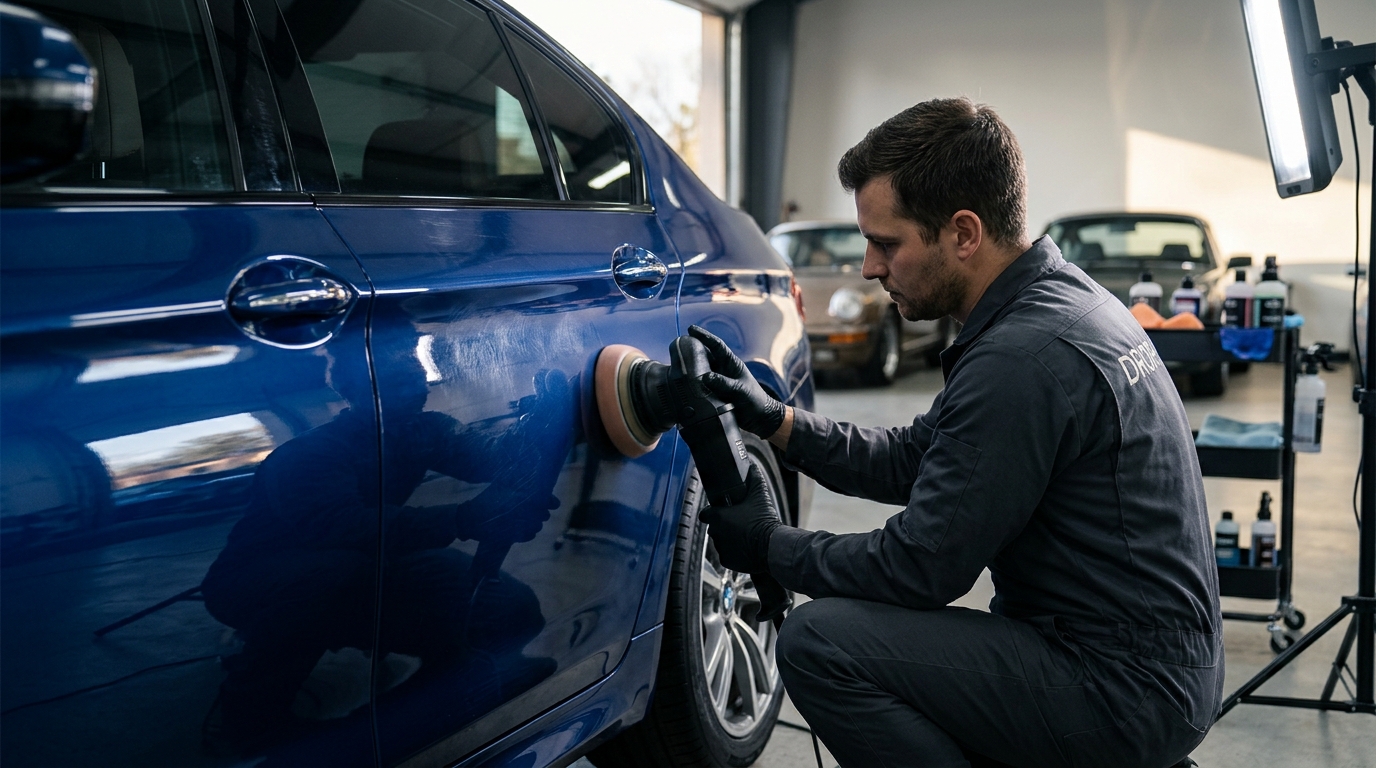
Paint correction is the process of mechanically removing a microscopic layer of clear coat to eliminate surface defects like swirl marks and scratches. For vehicle owners in the Salt Lake Valley, Drop Detailing provides professional solutions that restore paint clarity without damaging the underlying finish. This guide explains the most effective methods for achieving a flawless, showroom-quality finish.
Understanding Paint Defects and Depth
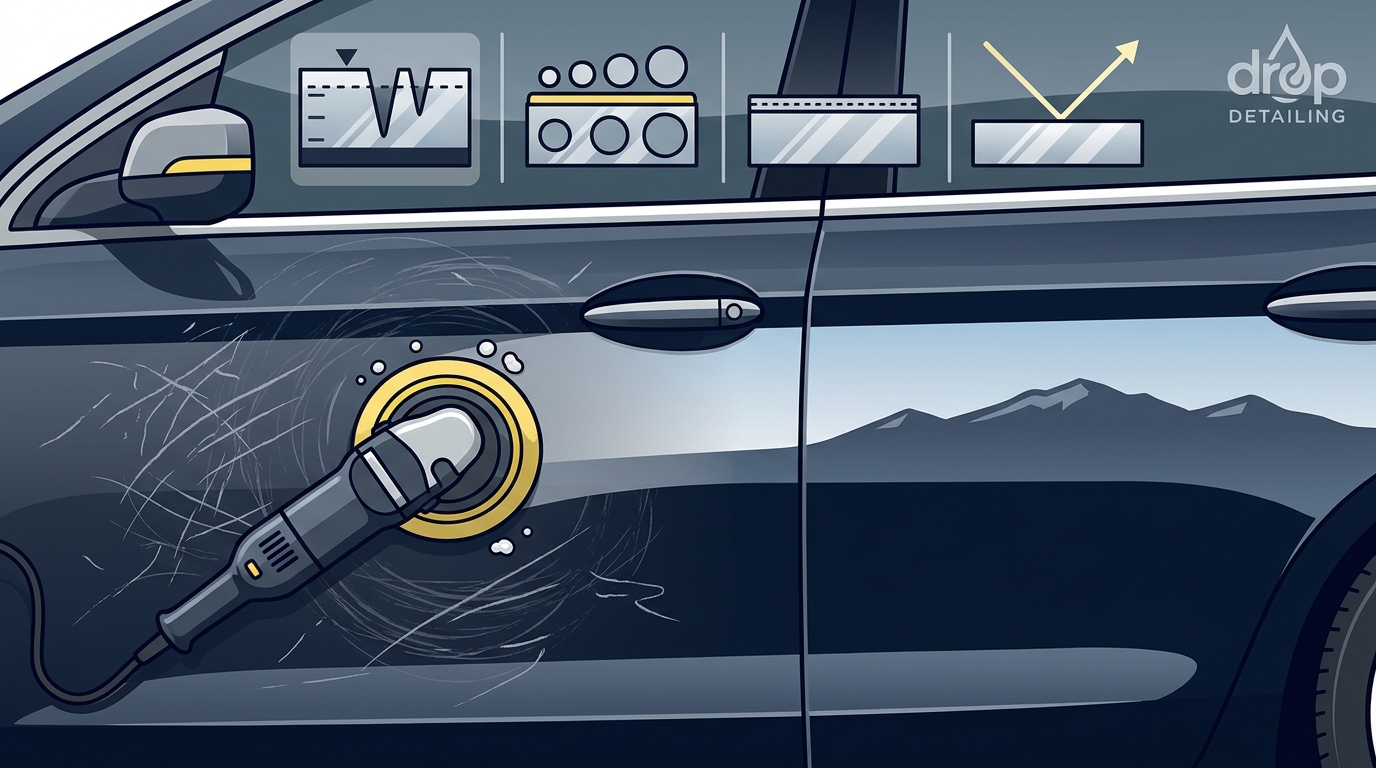
Before selecting a correction method, you must identify the type of defect. Swirl marks are fine, circular scratches caused by improper washing techniques or abrasive cloths. They are typically shallow and reside in the uppermost layer of the clear coat. Deeper scratches, often caused by keys or rocks, may penetrate the clear coat and reach the color coat or primer. Understanding this distinction is critical because it dictates the level of aggression required for removal.
Paint correction is a precise science that balances defect removal with clear coat preservation. If a scratch is too deep, no amount of polishing will remove it without compromising the structural integrity of the paint. Professional assessors use paint depth gauges to measure the remaining clear coat thickness. This data ensures that the correction process removes only the necessary amount of material, leaving a healthy buffer for future maintenance.
Single-Step Polishing for Light Defects
Single-step polishing is the most common method for removing light swirls and oxidation. This technique uses a hybrid compound that combines cleaning and polishing agents in one product. It is ideal for vehicles with minor defects that do not require extensive material removal. The process is faster and less aggressive than multi-step corrections, making it suitable for regular maintenance details.
At Drop Detailing, technicians often recommend single-step solutions for vehicles that are in good condition but need a refresh. This method restores gloss and clarity efficiently. However, it is not suitable for deep scratches or heavily oxidized paint. The implication for the owner is that single-step polishing is a cost-effective way to maintain appearance without the downtime associated with full corrections.
Multi-Step Correction for Severe Damage
Multi-step correction is the gold standard for removing deep scratches and heavy swirl patterns. This process involves using a series of progressively finer abrasives. It typically begins with a cutting compound to remove the bulk of the defect, followed by a polishing compound to refine the surface, and finally a finishing polish to maximize gloss. This method allows for precise control over material removal.
The evidence for multi-step correction is clear in the results. By separating the cutting and polishing phases, technicians can achieve a mirror-like finish that single-step products cannot match. This level of precision is essential for high-end vehicles or those with thin clear coats. The implication is that while multi-step correction takes longer, it provides the most durable and visually superior result. It is the preferred method for clients seeking a flawless, long-lasting finish.
Machine-Assisted vs. Hand Polishing
Machine-assisted polishing uses rotary or dual-action (DA) polishers to apply compounds to the paint. These tools provide consistent pressure and speed, which is crucial for even defect removal. Hand polishing, while safer for beginners, lacks the consistency and efficiency of machine-assisted methods. For professional results, machine-assisted techniques are the industry standard.
Dual-action polishers are particularly popular among professional detailers because they are less likely to burn through the clear coat than rotary machines. They offer a balance of cutting power and safety. At Drop Detailing, the team utilizes professional-grade DA machines to ensure uniform results across the entire vehicle. The implication for the client is that machine-assisted correction is faster and more reliable than hand polishing, especially for larger vehicles or complex curves.
Post-Correction Protection and Maintenance
Paint correction removes the top layer of the clear coat, leaving the paint vulnerable to environmental contaminants. Therefore, post-correction protection is not optional; it is essential. Applying a protective layer immediately after correction locks in the gloss and shields the paint from future damage. This step ensures that the investment in correction lasts for years rather than months.
Ceramic coating is the most effective post-correction protection available. A ceramic coating is a liquid polymer that chemically bonds to the paint, creating a hydrophobic and durable shield. It repels water, dirt, and UV rays, making the vehicle easier to clean and maintain. The implication is that combining paint correction with ceramic coating provides the ultimate defense for your vehicle. This combination extends the life of the correction and preserves the resale value of the car.
Key Takeaways
- Paint correction is the mechanical removal of clear coat to eliminate swirls and scratches.
- Single-step polishing is best for light defects and regular maintenance.
- Multi-step correction is required for deep scratches and heavy swirl patterns.
- Machine-assisted polishing provides consistent and efficient results.
- Post-correction protection, such as ceramic coating, is essential for longevity.
- Professional assessment ensures that the correct method is chosen for your paint condition.
Frequently Asked Questions
How long does paint correction take?
The duration depends on the severity of the defects and the size of the vehicle. A single-step polish may take a few hours, while a multi-step correction can take one to two days. Professional detailers provide accurate time estimates after an initial inspection.
Will paint correction remove all scratches?
No, paint correction can only remove scratches that are within the clear coat. If a scratch penetrates the color coat or primer, it cannot be removed through polishing. In such cases, touch-up paint or repainting may be necessary.
Is paint correction safe for my car's paint?
Yes, when performed by a professional using the correct products and techniques. The process is designed to remove only the necessary amount of clear coat. However, improper technique can damage the paint, which is why professional service is recommended.
How often should I get paint correction?
Most vehicles do not require frequent paint correction. A full correction is typically needed every few years, depending on how the car is maintained. Regular washing and protective coatings can reduce the need for correction.
Can I do paint correction myself?
While it is possible to do paint correction at home, it requires significant skill, practice, and the right equipment. Mistakes can be costly and difficult to fix. For best results, it is recommended to hire a professional detailer.
Conclusion
Choosing the right paint correction method depends on the condition of your vehicle and your desired outcome. Whether you need a quick refresh or a full restoration, professional techniques ensure the best possible results. Drop Detailing in Murray, Utah, offers expert paint correction services tailored to your vehicle's needs. To schedule an assessment and restore your car's finish, request a quote today.