
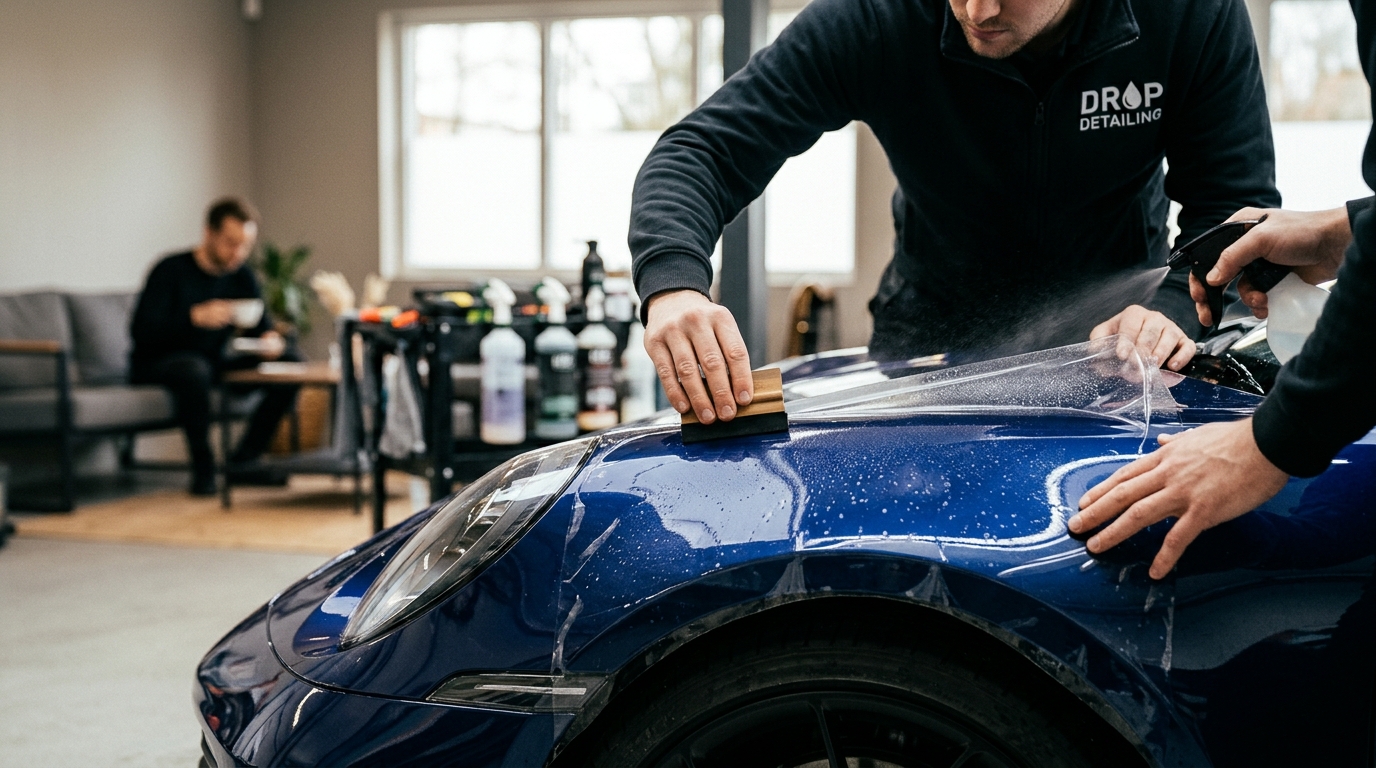
Paint protection film is a transparent, durable urethane layer applied to a vehicle's exterior to shield paint from physical damage. It functions as a sacrificial barrier that absorbs impacts from road debris, rocks, and insects. This technology preserves the factory finish while offering self-healing properties that maintain a glossy appearance over time.
What Is Paint Protection Film?
Paint protection film, often abbreviated as PPF, is a multi-layered material designed specifically for automotive surfaces. It is not a coating or a wax; it is a physical film that bonds to the paint. The material is engineered to be flexible enough to conform to complex curves while remaining tough enough to resist punctures.
Modern PPF systems typically consist of three distinct layers. The top layer is a clear coat that provides gloss and hydrophobic properties. The middle layer is the urethane body, which provides the structural integrity and impact resistance. The bottom layer is an adhesive that allows the film to bond securely to the paint without damaging it during removal.
At Drop Detailing, we utilize premium STEK DYNOshield film. This specific product features a nano-ceramic top coat bonded at a molecular level. This integration eliminates the need for separate waxes and enhances the film's ability to repel water and dirt.
How Does PPF Work on Your Car?
The mechanism of PPF relies on energy absorption. When a rock or piece of gravel strikes a vehicle, the kinetic energy is transferred to the film. The urethane layer flexes and absorbs this impact, preventing the force from reaching the clear coat and base paint underneath. This is the primary reason PPF is superior to liquid sealants, which offer chemical protection but lack physical impact resistance.
Self-healing technology is another critical component of how PPF works. The top coat of high-quality films contains a thermoplastic urethane that reacts to heat. When exposed to sunlight or warm water, the microscopic scratches and swirl marks on the surface relax and disappear. This feature ensures the film remains optically clear for the duration of its warranty.
The application process is precise. Technicians must map the film to the vehicle's contours, ensuring no air bubbles or wrinkles remain. At Drop Detailing, our team is professionally trained to apply PPF to any type of vehicle, from sedans to high-performance sports cars.
Key Benefits of PPF for Vehicle Owners
The primary benefit of PPF is the preservation of resale value. A vehicle with a flawless, chip-free paint job commands a higher price in the used market. By protecting the most vulnerable areas, such as the hood, front bumper, and fenders, owners can maintain the aesthetic integrity of their investment.
Hydrophobic performance is a secondary but significant advantage. The nano-ceramic top coat on modern PPF causes water to bead up and roll off the surface. This effect helps wash away dirt and contaminants, reducing the frequency of required washes. It also minimizes the risk of water spots forming on the paint.
UV protection is also inherent in the film's composition. The material blocks ultraviolet rays that cause paint to fade and oxidize over time. This is particularly important for vehicles parked outdoors in sunny climates. The film acts as a shield, preserving the original color depth and gloss of the paint.
Durability and Warranty Considerations
Adhesive quality is crucial for long-term durability. Poor adhesives can leave residue on the paint when the film is removed, potentially damaging the clear coat. Premium films use UV-resistant, anti-yellowing adhesives that bond securely but release cleanly. This ensures that the paint remains in pristine condition even after the film's lifespan ends.
Proper installation is the key to maximizing durability. If the film is not applied correctly, it may lift at the edges or trap moisture underneath. This is why it is essential to choose a certified installer. At Drop Detailing, we ensure that every installation meets the manufacturer's standards for longevity and performance.
Maintaining Your Paint Protection Film
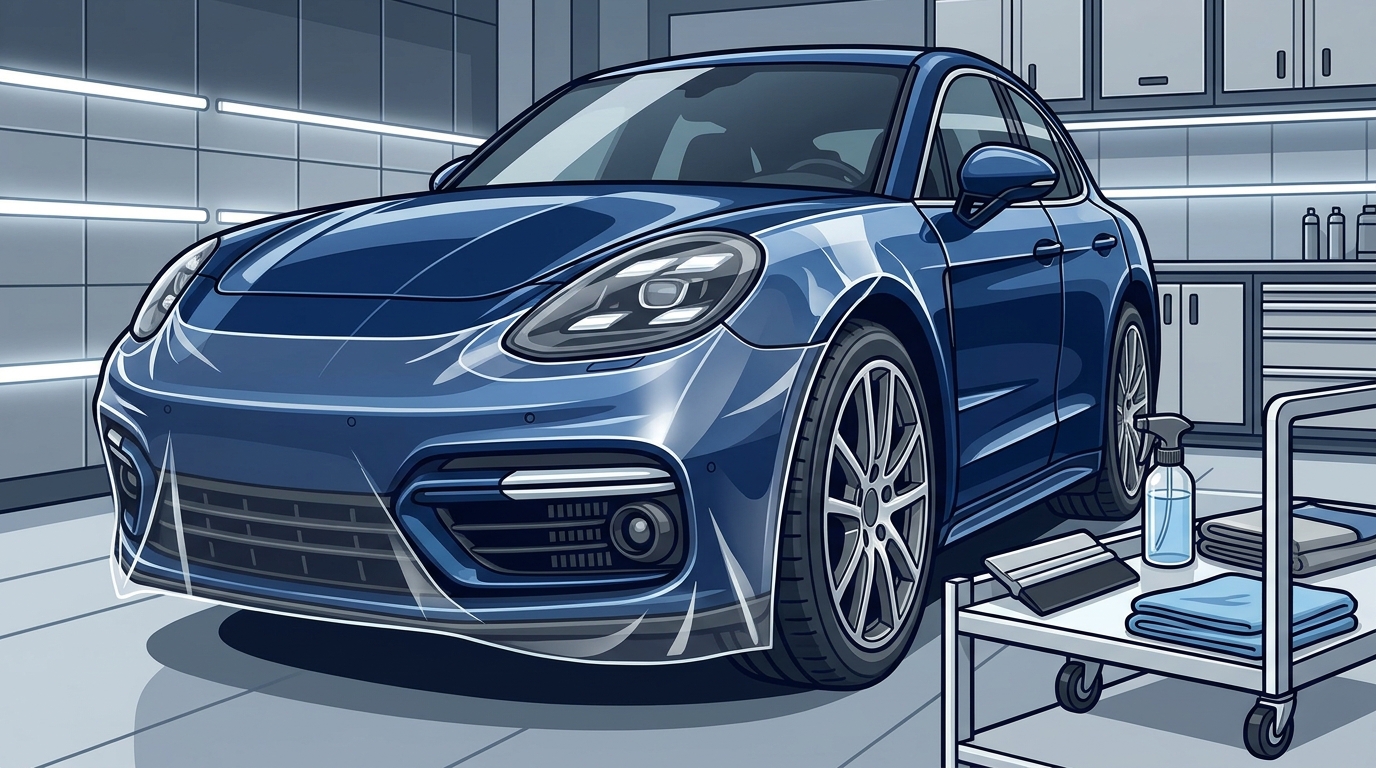
Maintaining PPF is simpler than maintaining bare paint. The hydrophobic top coat makes the surface easier to clean. Regular washing with a pH-neutral soap is sufficient to keep the film looking its best. Avoid using harsh chemicals or abrasive tools that could scratch the top coat.
While the self-healing properties handle minor scratches, deep gouges may require professional attention. If a stone chip penetrates the film, it is important to address it promptly to prevent moisture from reaching the paint. Wheel repair and other cosmetic services can also be performed to keep the entire vehicle looking cohesive.
For those who want to enhance the protection further, combining PPF with ceramic coating is a popular option. The ceramic layer adds an extra degree of gloss and chemical resistance. At Drop Detailing, we offer both services, allowing customers to choose the level of protection that fits their needs and budget.
Key Takeaways
- Paint protection film is a physical urethane layer that absorbs impact from road debris.
- Self-healing top coats use heat to erase minor scratches and swirl marks.
- Premium films like STEK DYNOshield feature nano-ceramic top coats for enhanced hydrophobicity.
- A 10-year warranty protects against yellowing, cracking, and delamination.
- Proper installation by certified technicians is critical for long-term performance.
- PPF helps preserve resale value by keeping the paint free of chips and scratches.
- Combining PPF with ceramic coating offers the highest level of protection and gloss.
Frequently Asked Questions
How long does paint protection film last?
High-quality PPF typically lasts between 5 and 10 years, depending on the brand and environmental conditions. The STEK DYNOshield film used by Drop Detailing is warranted for 10 years against yellowing and cracking.
Will PPF damage my paint when removed?
No, premium PPF uses a safe adhesive that bonds to the paint without damaging it. When removed, the adhesive releases cleanly, leaving the paint in its original condition.
Can I wash my car with PPF installed?
Yes, you can wash your car normally. The hydrophobic top coat actually makes washing easier. Use a pH-neutral soap and avoid abrasive tools to maintain the film's appearance.
Does PPF prevent all scratches?
PPF prevents scratches from road debris, rocks, and minor abrasions. However, it may not prevent deep gouges from sharp objects. The self-healing top coat will erase minor scratches automatically.
Is PPF better than ceramic coating?
PPF and ceramic coating serve different purposes. PPF provides physical impact resistance, while ceramic coating offers chemical resistance and enhanced gloss. Many owners use both for maximum protection.
Where should PPF be applied on my car?
PPF is most effective on high-impact areas such as the hood, front bumper, fenders, and side mirrors. Full coverage is also available for those who want complete protection.
Conclusion
Paint protection film is a vital investment for any vehicle owner who wants to preserve the appearance and value of their car. By understanding how PPF works, you can make an informed decision about the level of protection that suits your needs. At Drop Detailing, we are committed to providing expert installation and high-quality materials that deliver long-lasting results. Contact us today to schedule your PPF installation and give your vehicle the ultimate shield against road hazards.