
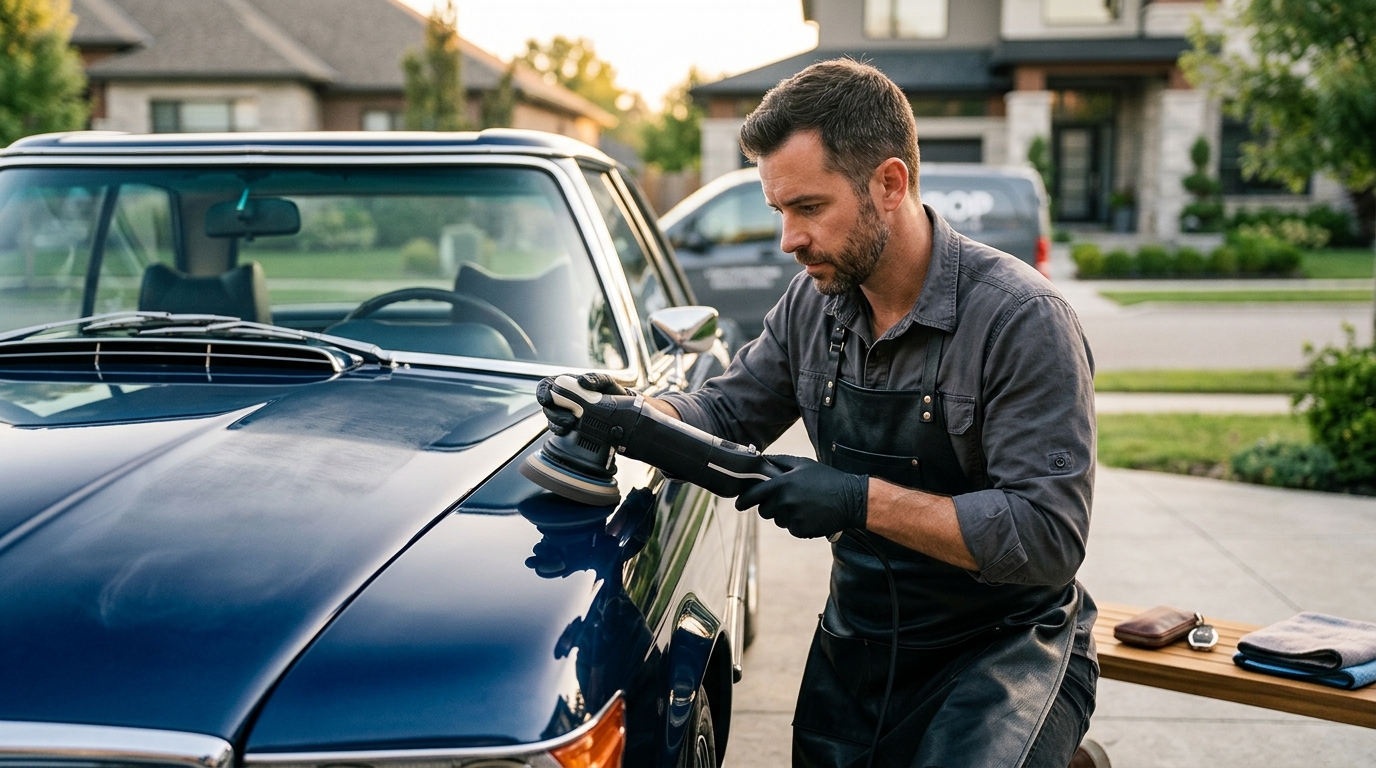
Professional paint correction restores dull finishes by mechanically removing a thin layer of damaged clear coat using precision abrasives. This process eliminates embedded contaminants, oxidation, and micro-scratches that scatter light and cause a hazy appearance. By leveling the surface, the paint reflects light uniformly, restoring the original depth and gloss. Drop Detailing utilizes this scientific approach to bring life back to faded vehicles.
The Science of Light Reflection
Understanding why paint looks dull requires understanding how light interacts with surfaces. A perfect, smooth paint surface acts like a mirror, reflecting light in a single, coherent direction. This is known as specular reflection. When a car sits in a driveway or garage, it accumulates microscopic defects. These defects include swirl marks, water spots, and oxidation. Each of these imperfections disrupts the smoothness of the clear coat.
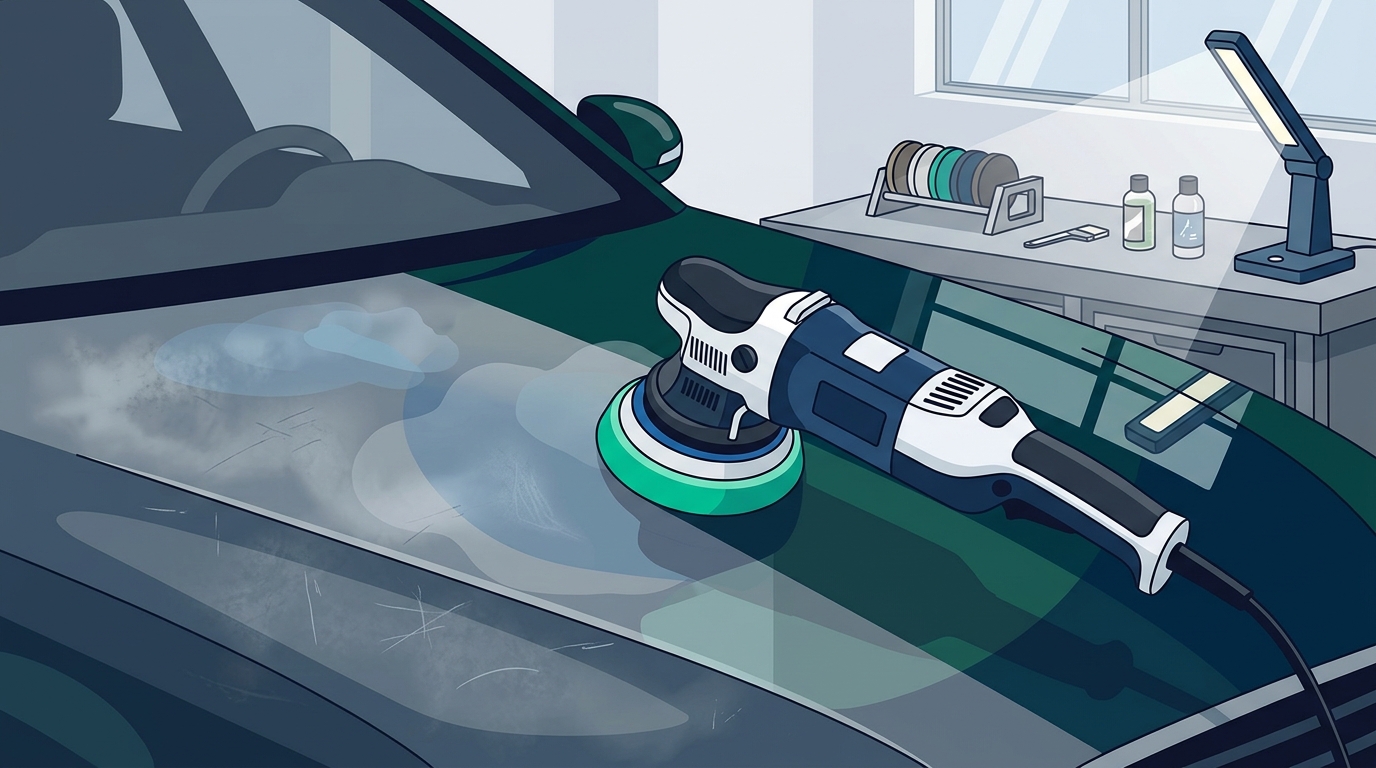
When light hits a damaged surface, it scatters in multiple directions instead of reflecting uniformly. This phenomenon is called diffuse reflection. To the human eye, this scattered light appears as a dull, hazy, or chalky finish. The paint is not necessarily dirty; it is physically altered. Paint correction is the process of removing this damaged layer to restore specular reflection. Without this mechanical removal, no amount of wax or sealant can fix the underlying optical issue. The goal is to return the surface to a state where it reflects light sharply and clearly.
The Mechanics of Abrasion
Professional correction relies on the principle of abrasion. This involves using compounds containing microscopic particles to grind away the top layer of the clear coat. The clear coat is the transparent, protective layer applied over the colored paint. It is designed to be sacrificial, meaning it takes damage so the color underneath does not. However, it has a finite thickness. Professional detailers must carefully control how much material is removed.
Using the wrong abrasive can remove too much clear coat, leading to thin spots or even exposing the color coat. This is why professional services use specific grits of polishing compounds. A coarse compound might be used to remove deep scratches, followed by a finer compound to refine the surface. This multi-step process ensures that the surface is not only smooth but also free of the micro-scratches left by the previous step. Drop Detailing technicians are trained to assess the remaining clear coat thickness before beginning any work, ensuring the vehicle is safe for correction.
Decontamination Before Polishing
Before any abrasive work begins, the paint must be thoroughly decontaminated. This step is critical because polishing over embedded contaminants can cause new scratches. The first stage involves a chemical decontamination, often using a clay bar or synthetic clay mitt. This process removes bonded contaminants like tar, tree sap, and industrial fallout that a regular wash cannot remove. These particles are harder than the clear coat and will dig into the paint if polished over.
After physical decontamination, an iron remover is often applied. This chemical solution reacts with embedded iron particles, turning purple or blue, and then rinses them away. These particles are invisible to the naked eye but are highly abrasive. By removing these hidden threats, the detailer creates a safe foundation for polishing. Exterior detailing services at Drop Detailing include these rigorous decontamination steps to ensure the paint is ready for correction. Skipping this step is a common mistake that leads to poor results and potential damage.
The Role of Machine Polishing
The detailer works in small sections, often 2x2 feet, to ensure even coverage. They monitor the paint temperature and the amount of material being removed. This precision is what distinguishes professional correction from a quick buff. The result is a surface that is not only glossy but also perfectly flat. This flatness is essential for the next step: protection. A corrected surface provides the ideal base for applying long-term protective products. New vehicle protection details often combine correction with coating to lock in the restored finish.
Locking In the Results
Once the paint is corrected, it is exposed and vulnerable. The clear coat has been thinned, and the surface is now highly reactive. Without protection, the paint will begin to oxidize and accumulate contaminants again. This is why correction is almost always followed by a protective layer. This layer can be a traditional wax, a synthetic sealant, or a ceramic coating. Each option offers different levels of durability and hydrophobic properties.
Ceramic coatings, in particular, bond chemically to the paint, creating a hard, glass-like shield. This shield repels water, dirt, and UV rays, preserving the corrected finish for years. The combination of correction and protection is the gold standard in vehicle maintenance. It addresses both the aesthetic issue and the long-term durability of the paint. Wheel repair and detailing services often complement this process, ensuring the entire vehicle looks cohesive. By locking in the results, the investment in correction is protected and extended.
Key Takeaways
- Paint correction removes a thin layer of clear coat to eliminate defects that scatter light.
- Specular reflection is restored when the surface is made perfectly smooth and flat.
- Decontamination is a mandatory first step to prevent new scratches during polishing.
- Dual-action polishers provide the precision needed to safely remove damaged paint layers.
- Correction must be followed by protection to preserve the restored finish.
- Professional assessment of clear coat thickness prevents irreversible damage.
Frequently Asked Questions
How much paint is removed during correction?
Professional correction removes a very thin layer of clear coat, typically measured in microns. The exact amount depends on the severity of the defects and the thickness of the existing clear coat. Detailers use thickness gauges to ensure they do not remove too much material.
Can all cars be paint corrected?
Most modern cars with a clear coat can be corrected. However, vehicles with very thin clear coats, single-stage paint, or severe damage may not be suitable for full correction. A professional assessment is required to determine the best approach.
How long does the process take?
The time required varies based on the vehicle size and the level of correction. A one-step correction might take a few hours, while a multi-stage correction can take several days. Complex vehicles or those with extensive damage require more time.
Will correction remove all scratches?
Correction can remove most swirl marks and light scratches. Deep scratches that penetrate the color coat cannot be removed by polishing alone. These may require touch-up paint or other repair methods in addition to correction.
How long does the gloss last?
The gloss from correction lasts as long as the clear coat remains intact. However, without protection, the paint will begin to dull again due to environmental exposure. Applying a sealant or ceramic coating significantly extends the life of the corrected finish.